+fort logo

+Fort Anti-Bullying Mobile App for Youth

Giving Bullied Youth a Safe Place to Share What Happens and Find Help

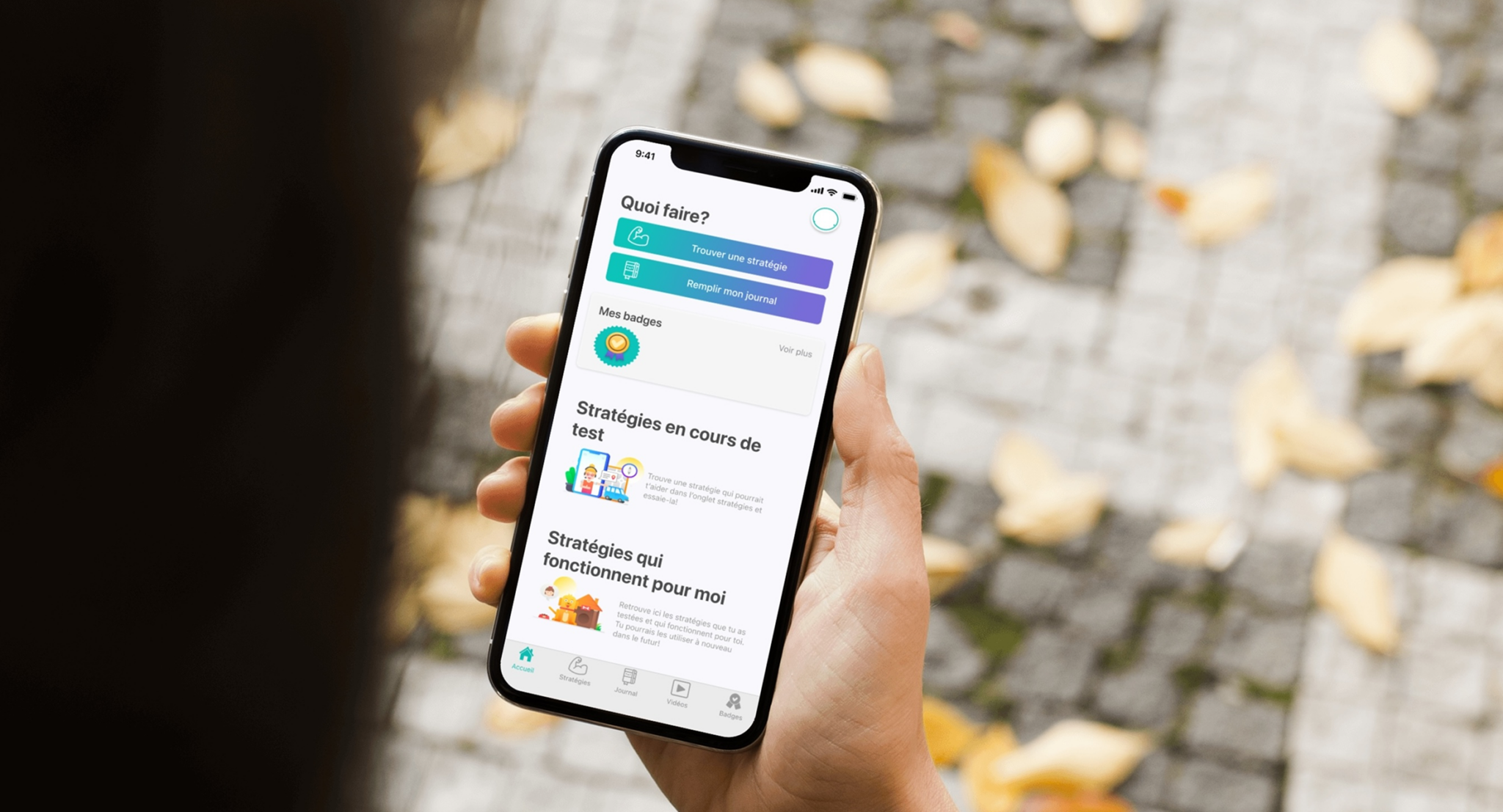
User interacting with a mental health mobile app designed to support youth facing bullying and improve emotional well-being

Categories

Mental Health & Wellness

Technologies used

iOS | Android | Backend | Web Application

About The Client

The CIUSSS de l’Est-de-l’ÃŽle-de-Montréal is the integrated university health and social services centre for eastern Montreal. +Fort was developed by a team of experts led by Dr. Isabelle Ouellet-Morin, holder of the Canada Research Chair in the Developmental Origins of Vulnerability and Resilience, professor at the Université de Montréal, and researcher at the Research Centre of the Institut universitaire en santé mentale de Montréal and at GRIP. The project is aimed at young people who experience bullying, particularly those who don’t feel able to talk to an adult about it.

Exterior of the Centre de recherche Fernand-Seguin de l'Hôpital Louis-H. Lafontaine, a two-storey brick building in Montreal

Project Overview

The Project

The research team had already built a first anti-bullying app for children and teenagers, designed for young victims who don’t dare confide in an adult. The app had potential, but it wasn’t holding up well enough for everyday use. The team turned to Sidekick Interactive to rebuild it as a native app for iOS and Android, along with a web dashboard to manage the program.

The Context

The original version was too complicated for its users. Forms were long, the app tried to do too many things at once, and crashes and bugs came up regularly, all signs of a development done in a hurry. For a teenager who is already being bullied, a confusing screen or a crash is often enough to give up on the app altogether. Young people also use well-designed apps every day, and they naturally compare a mental health app for teens to the ones already on their phones.

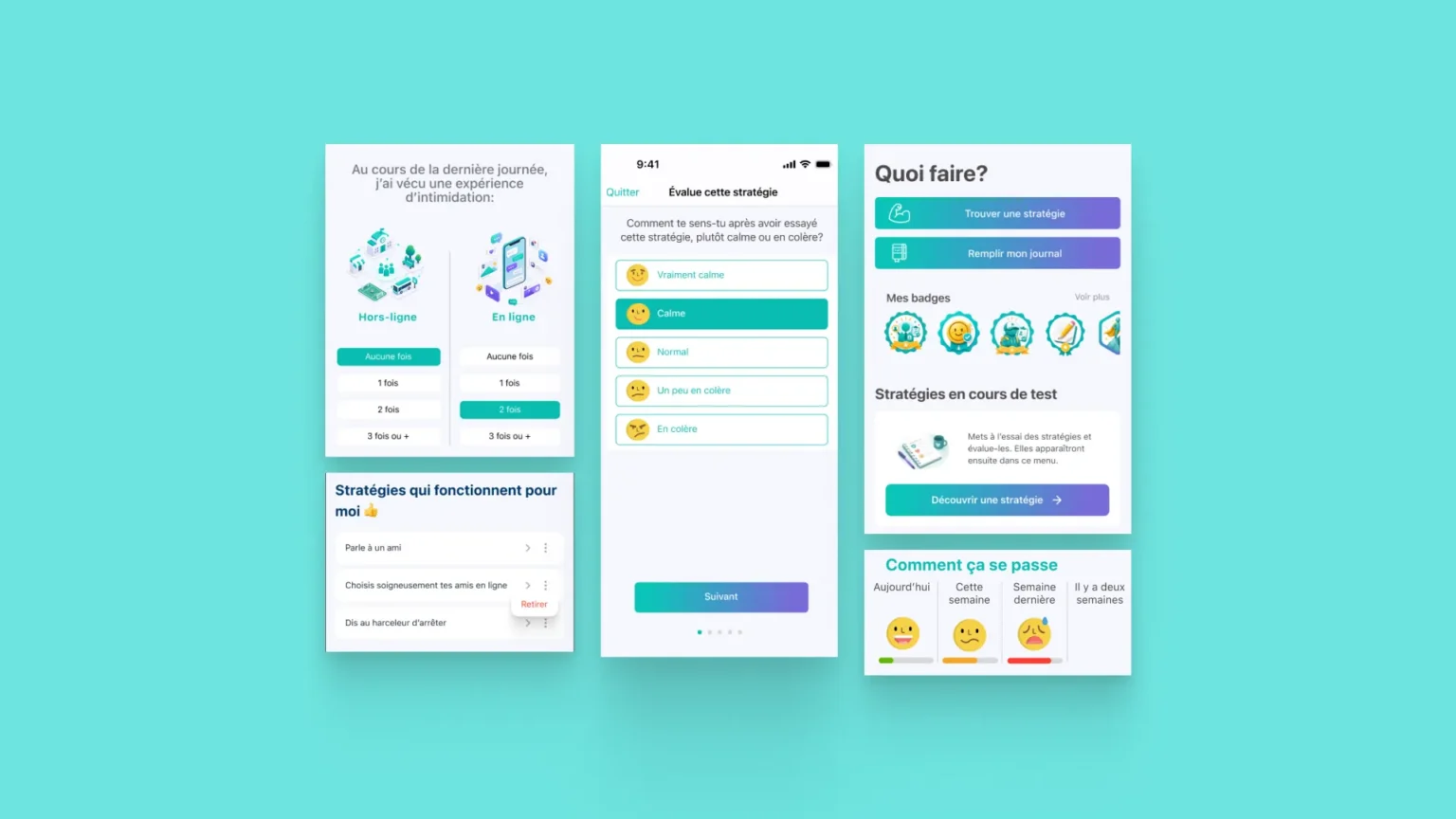
+Fort app components showing an offline and online bullying log, a strategy rating screen with mood options, and a weekly mood tracker

Challenges and Technical Constraints for an Anti-Bullying App

The Challenge

We had to turn a research tool into an app young people would want to use on their own. That meant a simple, reassuring experience, a clear promise that what they share stays confidential, and a reliable way for the research team to manage the program.

Constraints

A young audience used to fast, polished mobile apps

An existing app whose scope needed to shrink, not grow

Native development on both iOS and Android

A web dashboard for the research team, built on the same Azure .NET backend

A dedicated test phase to validate stability and performance

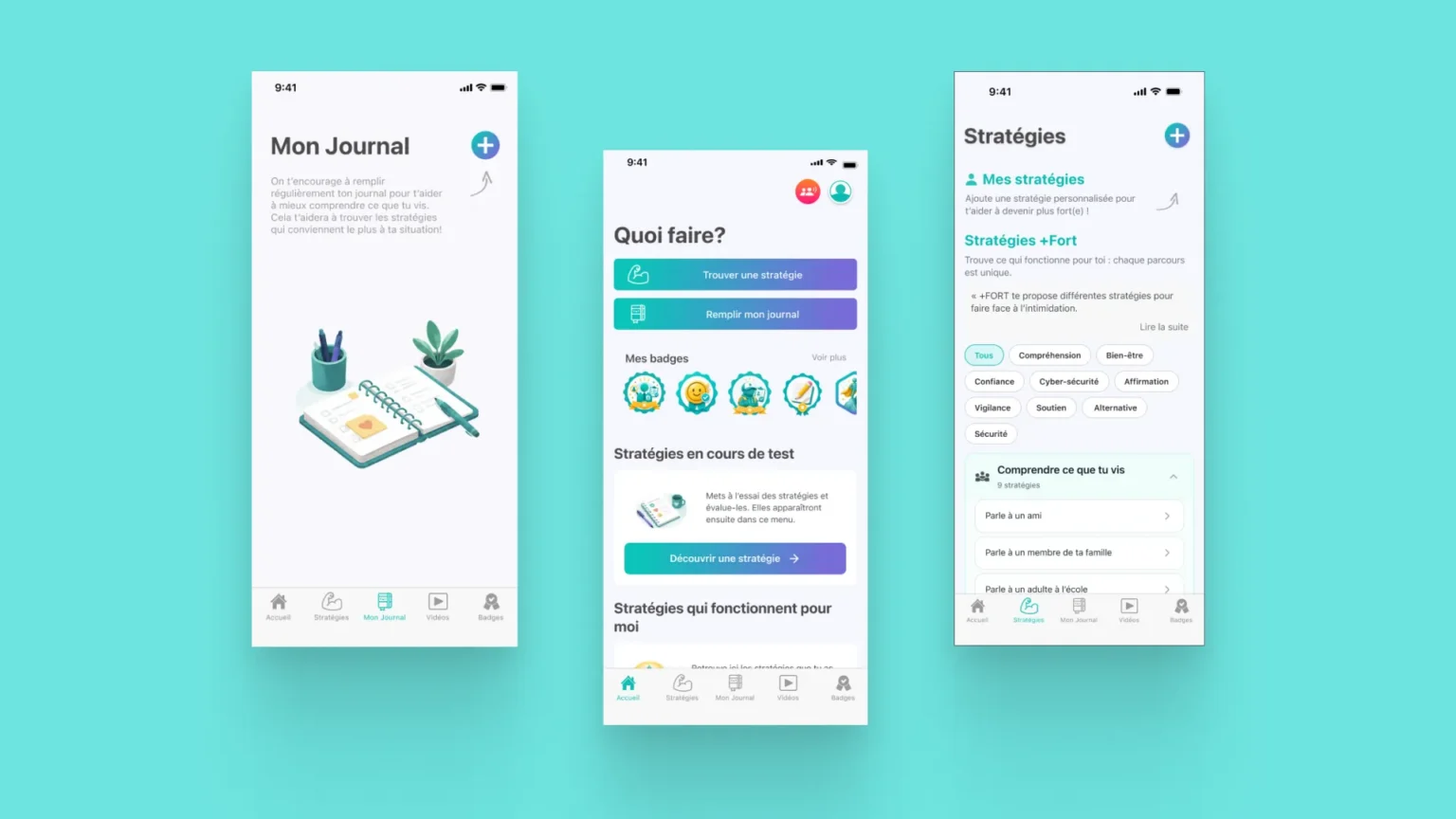
Three +Fort app screens: the journal, the home screen with strategy and journal shortcuts, and the list of strategies by category

Our Approach and Solution for a Youth-Friendly Mental Health App

Starting With a Co-Creation Workshop

We started with a co-creation workshop with the research team to decide what the app needed to do for young users, and which parts of the first version could go. The conclusions were written up in a specification document that we followed throughout development.

Keeping Only the Features That Matter

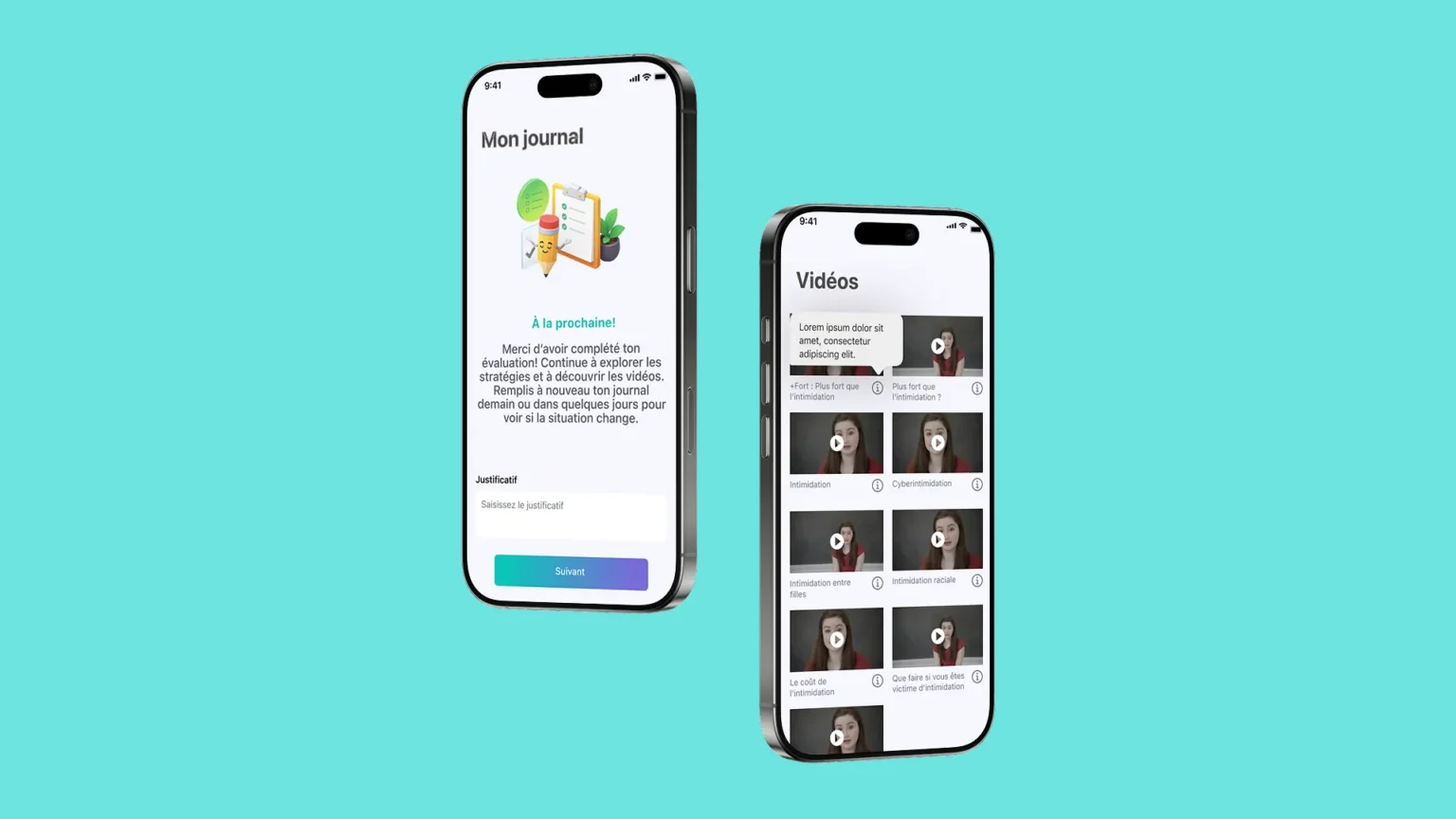
We kept the most useful features and dropped the rest. Young users browse a wide range of strategies to reduce the bullying they face, try them, and hold on to the ones that fit their situation. Short video capsules explain bullying in more depth. The journal is the bullying reporting app side of +Fort: they record what happened, how they felt, and where it took place, whether at school, online, or on social media, so it also works as a cyberbullying app. Simple graphs then help them make sense of their experience and share it if they choose to.

Questions are short, answer choices are simple, illustrations are friendly, and the app reminds users that their answers are confidential. Our UX/UI design work focused on keeping the app easy to use for a young audience dealing with a heavy subject.

Reminders and Alerts Through Push Notifications

We added push notifications that send reminders and alerts, to keep young users engaged over time. Regular use helps them keep their journal up to date and keep trying new strategies.

A Management Dashboard for the Research Team

Alongside the mobile app, we developed a web application that serves as a management dashboard for the research team. It shares the same Azure .NET backend as the iOS and Android apps.

Two +Fort app screens showing a journal completion message and a library of short videos about bullying and cyberbullying

Results and Benefits for +Fort's Anti-Bullying App

Results

The new +Fort replaced an unstable, overloaded tool with a simpler native anti-bullying app that runs reliably on iOS and Android. Its performance and quality were validated during the test phase, before launch.

Young users say they appreciate the variety of strategies and the chance to confide without being judged. They also report feeling more confident about stopping the bullying and asking for help when they want to. +Fort is now used in schools as a mental health app for students, and parents and youth workers can download it too, to support a young person they know.

Why the CIUSSS Chose Sidekick Interactive for Its Anti-Bullying App

Building an app involves many technical decisions that fall outside a research team’s field. The CIUSSS team found in Sidekick Interactive a partner that listened to their expertise on bullying, took the time to explain each technical choice clearly, and worked through ideas with them until the app met their goals.

“The Sidekick team was open and interested in our project and very respectful of our opinions. They also showed a lot of patience and did not hesitate to explain all the technical aspects that escaped us. Brainstorming together allowed us to go even further!”

Isabelle Ouellet-Morin, Researcher & Professor, University of Montreal

Sidekick Interactive's Expertise in Mental Health Apps for Youth

This project is part of our work in mental health and MedTech, where users need to trust an app before they use it. Our team combines native iOS and Android development, backend and web application development, and UX/UI design shaped around the people who will use the app, including young and demanding audiences. For research teams, the goal is an app that works for the young people using it and for the researchers managing it.

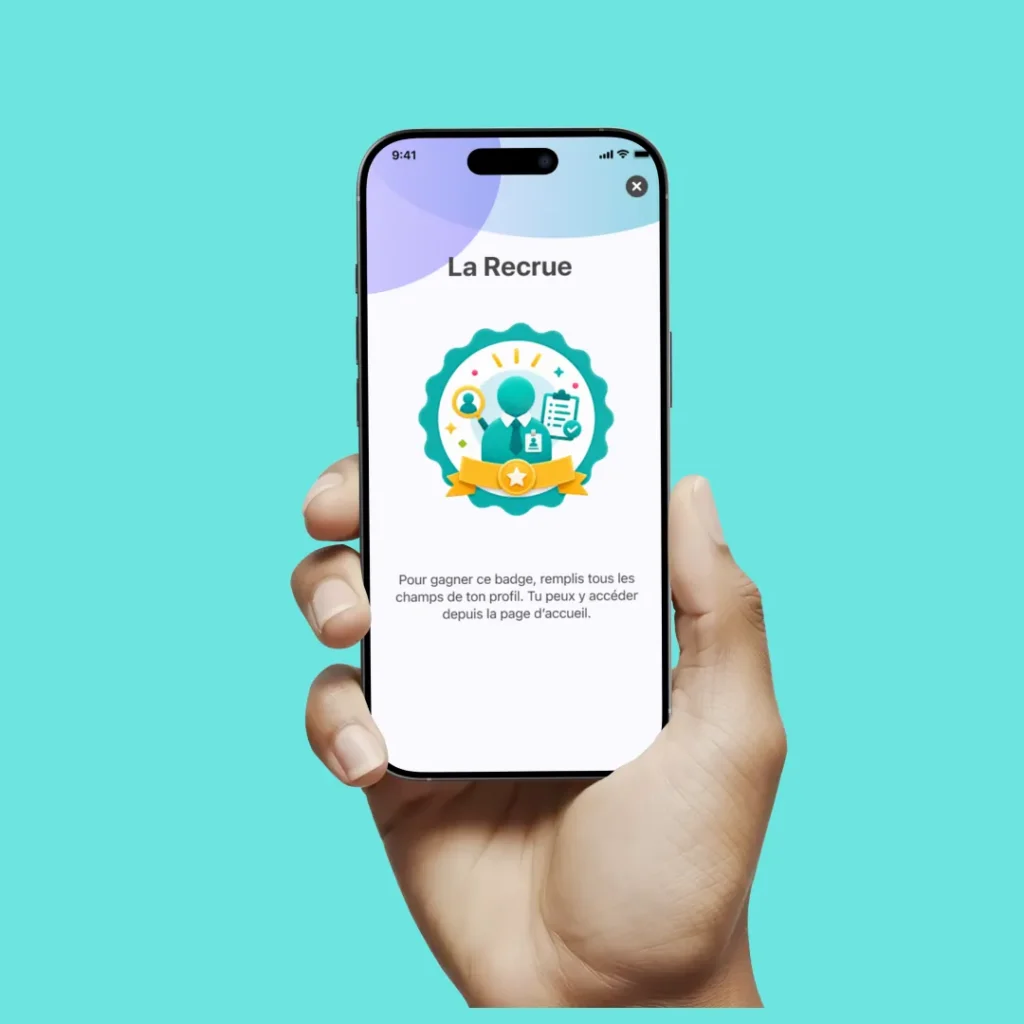
Hand holding a phone showing a +Fort app badge earned by completing the user profile

Other Projects

User controlling an electric vehicle charging session through a mobile app showing real-time charging status, cost, and battery level

CleverCharge EV Charging App UX/UI

User interacting with a mobile app to assess stress levels through a simple and intuitive interface

iSmart: Mental Health Research App

Let's talk about your 
idea.
project.
application.
Scroll to Top
Sidekick Interactive
Privacy Overview

This website uses cookies so that we can provide you with the best user experience possible. Cookie information is stored in your browser and performs functions such as recognising you when you return to our website and helping our team to understand which sections of the website you find most interesting and useful.