intelcom logo

Intelcom Logistics Mobile App for In-Store Returns

Turning a Three-Party Returns Process Into One Scan at the Counter

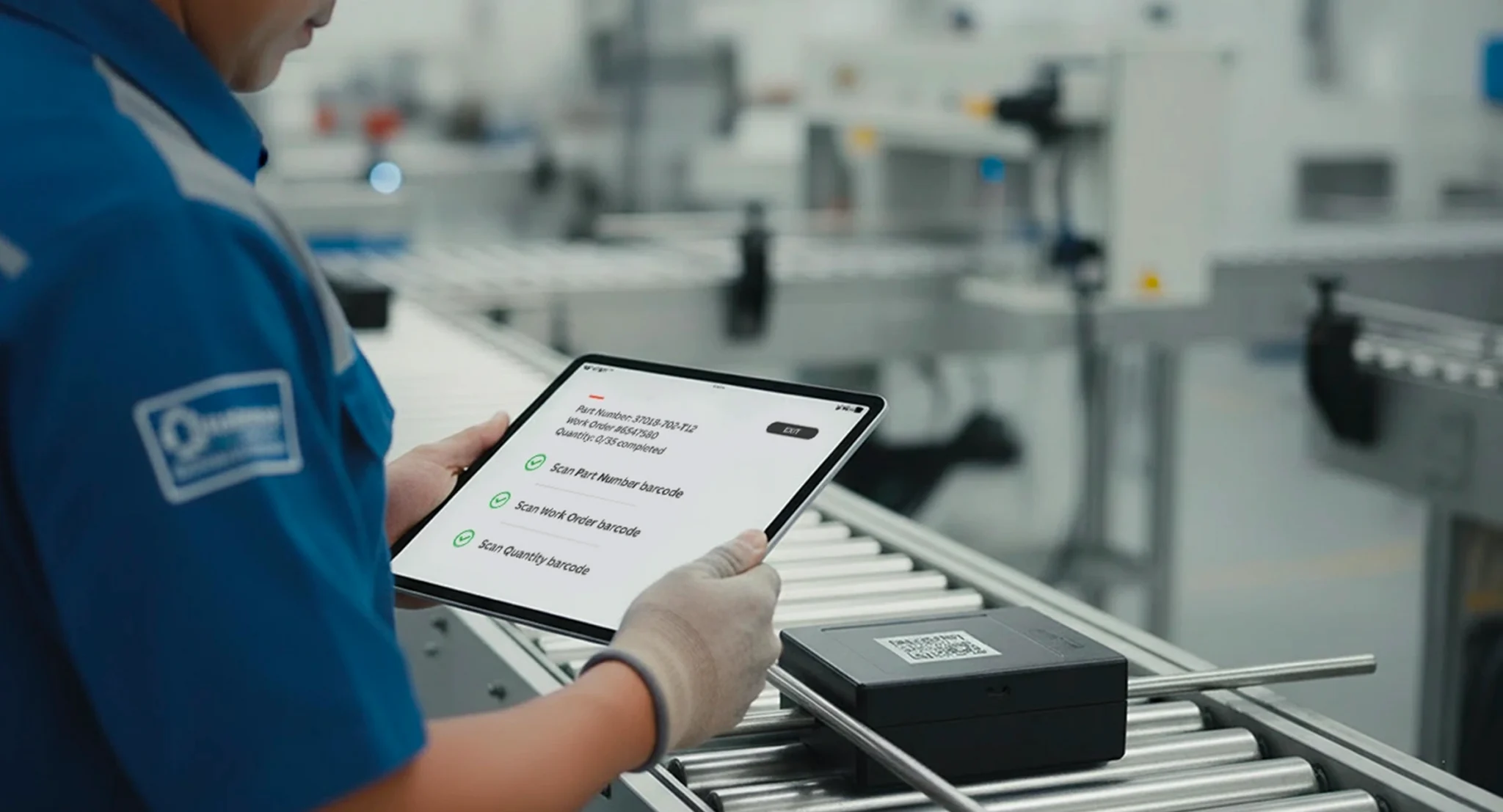
Warehouse worker using a tablet to scan a package barcode and manage returns through a logistics mobile app

Categories

Enterprise & Operations

Technologies used

iOS | iPad | QR Code Scanning | Third-Party API Integration

About The Client

Intelcom is the largest last-mile delivery operator in Canada and the carrier behind a large share of the country’s e-commerce parcels. Now operating as Intelcom | Dragonfly, the company covers the whole route between online retailers and their customers, including returns, the part of online shopping that only shows up when an order doesn’t work out.

Project Overview

The Project

Intelcom wanted to make returning an online purchase as easy as buying it. The customer requests a return from the retailer, receives a QR code, and drops the item off at a nearby convenience store, with no box or shipping label to deal with.

Before rolling this out, Intelcom needed proof that the whole chain worked. We were brought in to build the proof of concept, a native iOS app for iPad that store employees use to scan and confirm returns at the counter. The main technical question of this logistics app development project was whether a single scan in a convenience store could be accepted by two separate enterprise systems.

The Context

Three organizations had to agree for the service to exist. Intelcom handled the logistics, from collecting returned items in stores to closing the loop with the retailer. A network of convenience stores provided the physical locations, and its staff would be the app’s users. A major e-commerce player was the retailer whose returns flowed through the system, and whose APIs the app had to work with.

None of the three reported to the others, and the app sat right between them. The customer only has to show a QR code and hand over the item. Behind that, the QR code has to be validated in the retailer’s system, the parcel has to be registered with Intelcom, and both sides need to agree the item was accepted before the customer walks out. All of this happens at a checkout counter, handled by an employee with a line of customers waiting and no logistics background.

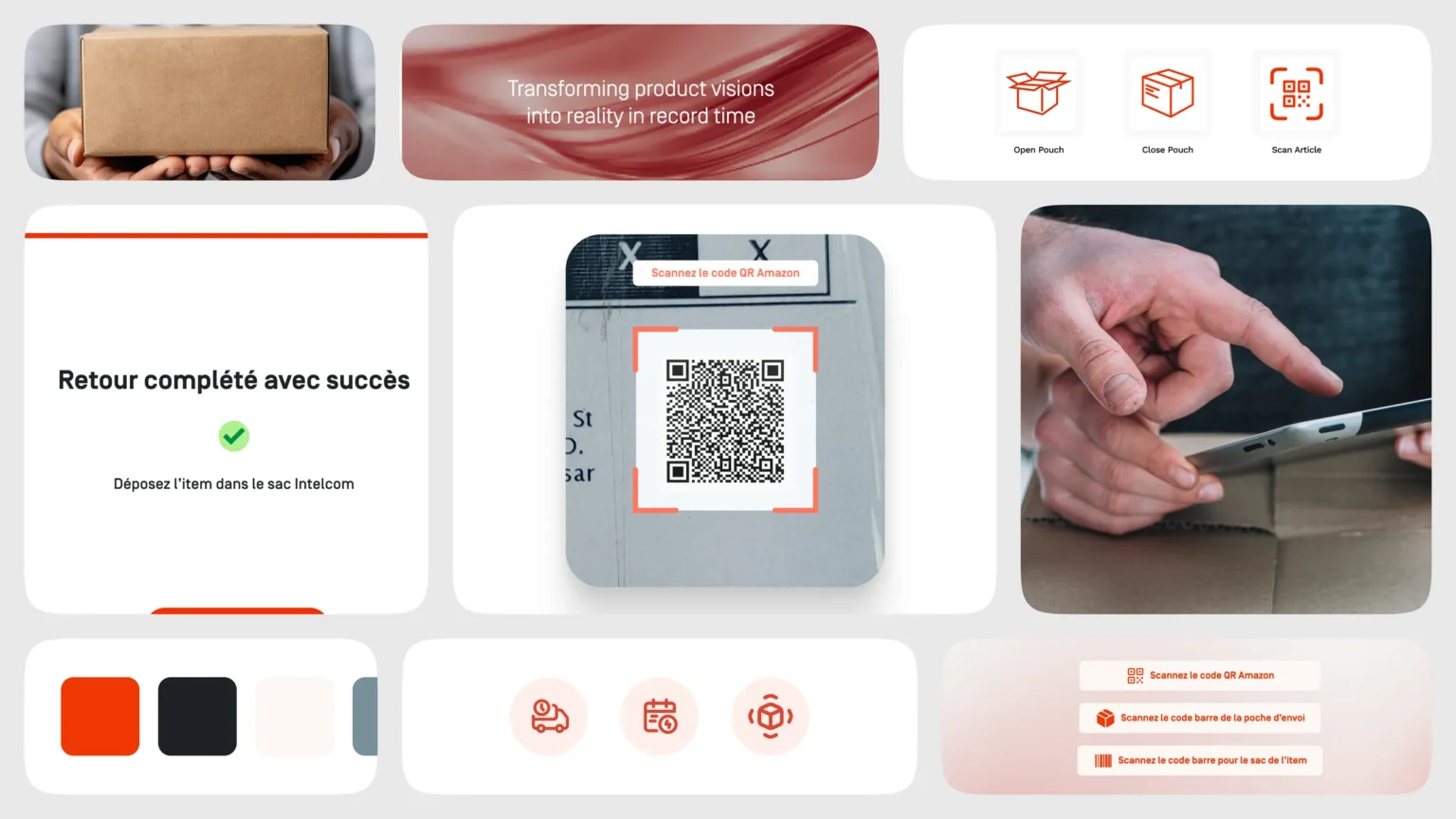
Overview of the Intelcom returns app interface with a QR code scanner, a return confirmation screen, pouch and scan icons, barcode scanning prompts and the brand color palette

Challenges and Technical Constraints for an In-Store Returns App

The Challenge

The challenge was to make one scan trigger a transaction confirmed by two companies with no shared roadmap, in an environment where every extra second shows up as a longer line. The proof also had to come quickly, since the partners were waiting on it to decide whether to move forward.

Constraints

Integration with the e-commerce partner’s API to validate each return’s QR code

Integration with Intelcom’s API to register the parcel and trigger its pickup

Store employees who change often and can’t be trained ahead of time

Deployment on devices inside a third-party retail network, with its own device policies

A two-month timeline set by the partners’ decision schedule

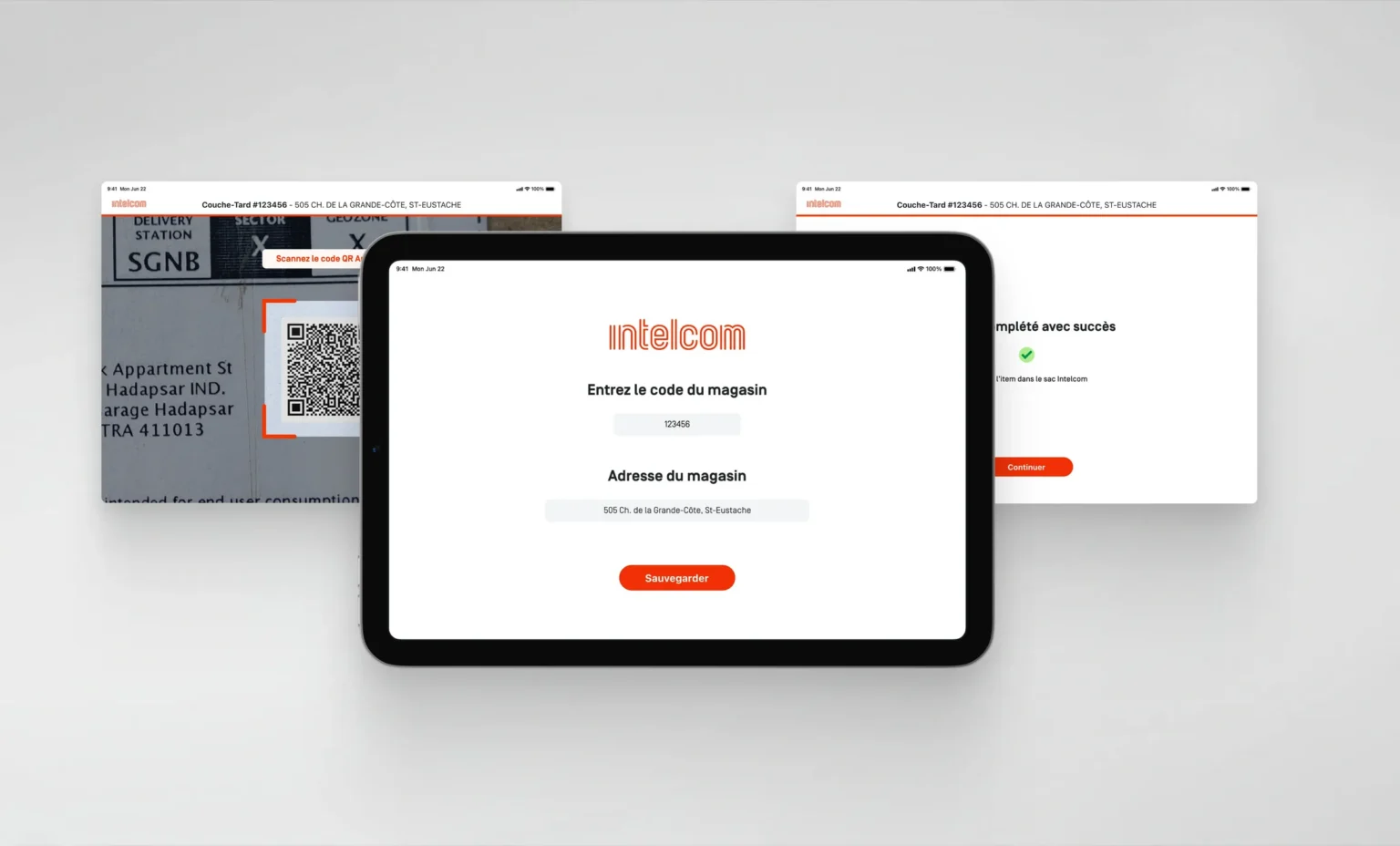
Three screens from the Intelcom returns iPad app: QR code scanning on a parcel label, store code and address setup, and a successful return confirmation

Our Approach and Solution for Logistics App Development

QR Code Scanning at the Counter

The employee scans the QR code shown by the customer. The app identifies the item, validates the return and confirms it on screen. Once the return is accepted, the app tells the employee to drop the item in the Intelcom bag, and the counter is ready for the next customer. On-screen instructions stay short enough to read at a glance.

Connecting the Retailer's and Intelcom's APIs

Behind the scan, the app talks to two systems at once. The e-commerce partner’s API validates the QR code and records the drop-off, so the customer’s refund process can start. Intelcom’s API registers the parcel and triggers the pickup. Getting both platforms to agree on a single transaction, in real time and from a store counter, was the core engineering work of the project. This kind of API integration is often where projects like this one stall, so we made it the first thing to prove.

An Interface Any Store Employee Can Use on the Spot

Convenience store staff change often and rarely have time for a tutorial, so we designed every screen around them. Our UX/UI design work focused on keeping each step obvious to someone opening the app for the first time, with a customer standing in front of them. We kept the number of choices on each screen

Planning the Rollout to Store Devices

The app also had to reach the stores. Alongside development, we worked out how it would get onto devices that employees can access in each location, within a retail network that has its own equipment and device policies. Solving this early meant the proof of concept answered an operational question as well as a technical one.

Results and Benefits for Intelcom's Logistics App

Results

Our team delivered a working proof of concept of Intelcom’s logistics app in two months. It covered the QR code scan, both API integrations, the counter interface and the deployment strategy for store devices. For a project meant to speed up a decision, that timeline mattered as much as the features themselves.

Intelcom and its partners could see the full return flow work, from the scan to the confirmation on both sides, and assess the rollout with the main technical unknown out of the way.

Why Intelcom Chose Sidekick Interactive for Its Returns App

Intelcom had already worked with us on earlier projects and came back for this one. In its Clutch review, Intelcom’s executive on the project rated Sidekick Interactive 4.5 out of 5 overall, with a perfect score on willingness to refer.

The review describes the finished product as a top-quality mobile app. It credits our team with connecting cleanly to Intelcom’s backend and APIs, and with an interface that worked for users with very different levels of comfort with technology. Their advice to future clients was to let our team bring its own ideas to the table instead of handing over a closed specification.

Sidekick Interactive's Expertise in Logistics App Development

This project reflects our work in logistics app development, for carriers and for the partners who handle their parcels. The same skills apply to courier app development and parcel delivery app development, where a mobile interface has to connect to a carrier’s systems and to its partners’ platforms, for people who rarely work at a desk. Because the app runs at a store counter, the project also called for a retail app development mindset, with a flow that keeps up with the pace of a checkout.

We regularly build custom workflow apps for frontline teams and work with enterprise clients whose projects cross organizational boundaries they don’t control. When the goal is to validate an idea before a larger investment, our POC app development approach relies on a small senior team and a scope limited to what the decision depends on.

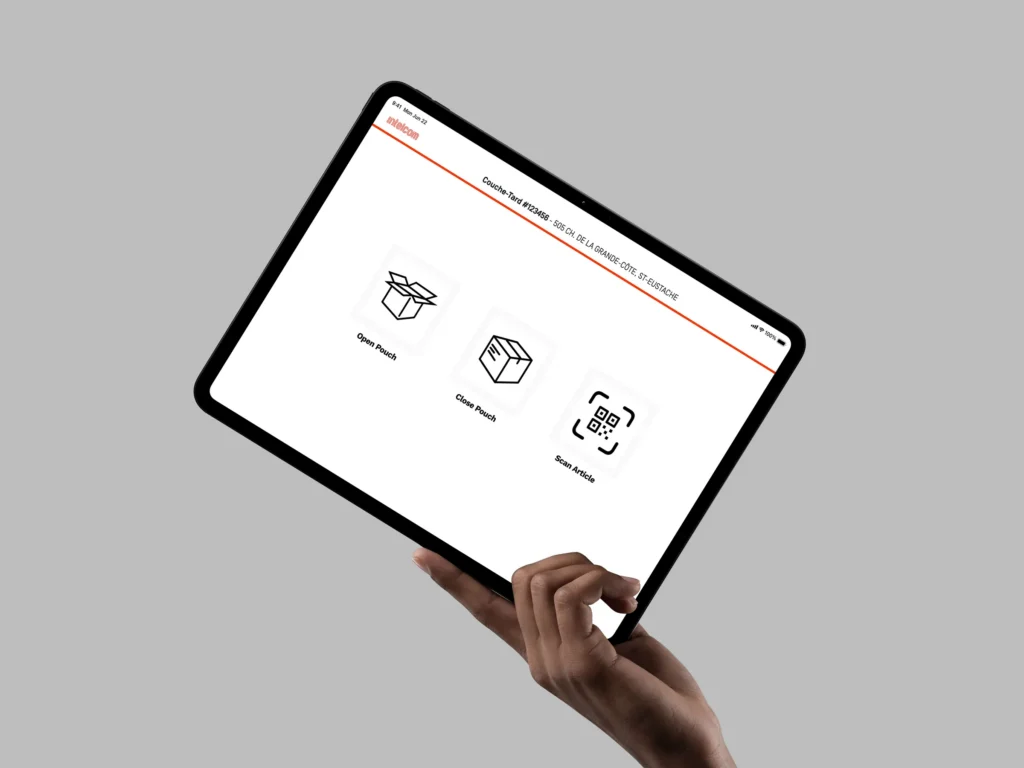
Hand holding an iPad showing the Intelcom returns app home screen with Open Pouch, Close Pouch and Scan Article options

Other Projects

User analyzing a fleet management dashboard showing real-time vehicle tracking, performance data, and operational metrics

Car2Go Snow Platform

User interacting with a mobile app to assess stress levels through a simple and intuitive interface

iSmart: Mental Health Research App

Let's talk about your 
idea.
project.
application.
Scroll to Top
Sidekick Interactive
Privacy Overview

This website uses cookies so that we can provide you with the best user experience possible. Cookie information is stored in your browser and performs functions such as recognising you when you return to our website and helping our team to understand which sections of the website you find most interesting and useful.