Aerial Home Security IoT Mobile App
Turning Wireless Motion Data into an Intuitive Home Security Experience
Categories
Enterprise & Operations | IoT
Technologies used
iOS (Swift) | Android (Kotlin) | API Integration
About The Client
Aerial Technologies is a Montreal-based startup behind a Motion Intelligence platform. The technology uses a home’s existing Wi-Fi infrastructure and AI to detect human presence and activity, without cameras, wearables, or extra sensors, powering applications across eldercare, home security, energy management, and home automation, all built on the same underlying IoT sensing technology. Aerial wanted this technology to reach more than security professionals, packaged into something a homeowner could set up and understand in minutes, with no technical background required.
Project Overview
The Project
Sidekick Interactive was brought in for a piece of custom IoT app development: designing and building Aerial’s first mobile app, the interface that would sit on top of its wireless sensing hardware and connect to the client’s own APIs. The brief was direct: take raw motion data generated by the device and turn it into something a regular person could read, trust, and act on, through a native iOS and Android app. One constraint shaped every decision on this project: there was no backend. All the intelligence lived in the hardware itself, and the app had to work directly with the data it received.
The Context
Home security products live or die on trust. Aerial’s detection method reads how Wi-Fi waves move around a room, technically solid, but its raw output isn’t something a homeowner can interpret at a glance. We needed an interface that kept the accuracy of the underlying IoT technology while making it as simple to use as a light switch, and one that adapted to different home layouts and household sizes, since what counts as normal activity varies from one home to the next.
Challenges and Technical Constraints for Aerial's IoT Home Security App
The Challenge
Translating Wi-Fi motion analysis into alerts anyone could understand instantly
Designing one interface that worked equally well for homeowners and for professional installers
Making the app configurable per household without turning setup into a chore
Building enough trust into the notification system that users would actually rely on it day to day
Constraints
No backend infrastructure: every screen had to work with data delivered directly from Aerial’s own APIs
Aerial had already built the Wi-Fi wave identification technology itself; our job was strictly the interface layer, taking a dense, technical dataset and making it readable without touching the underlying detection logic
Native iOS (Swift) and Android (Kotlin) development, to keep the app tightly integrated with the client’s APIs and hardware
A configuration flow flexible enough to cover different home layouts, without adding friction to onboarding
Our Approach and Solution for Aerial's Wireless IoT App
Prototyping Before Writing Production Code
We started with a co-creation workshop alongside Aerial’s team to map out how the technology should behave inside an app, then built a working prototype to test the information hierarchy and configuration logic before any production development began, as part of the IoT app design process. This let both teams confirm the direction early, which mattered given how tightly the interface was tied to the hardware’s limitations.
A Configurable, Plain-Language Experience
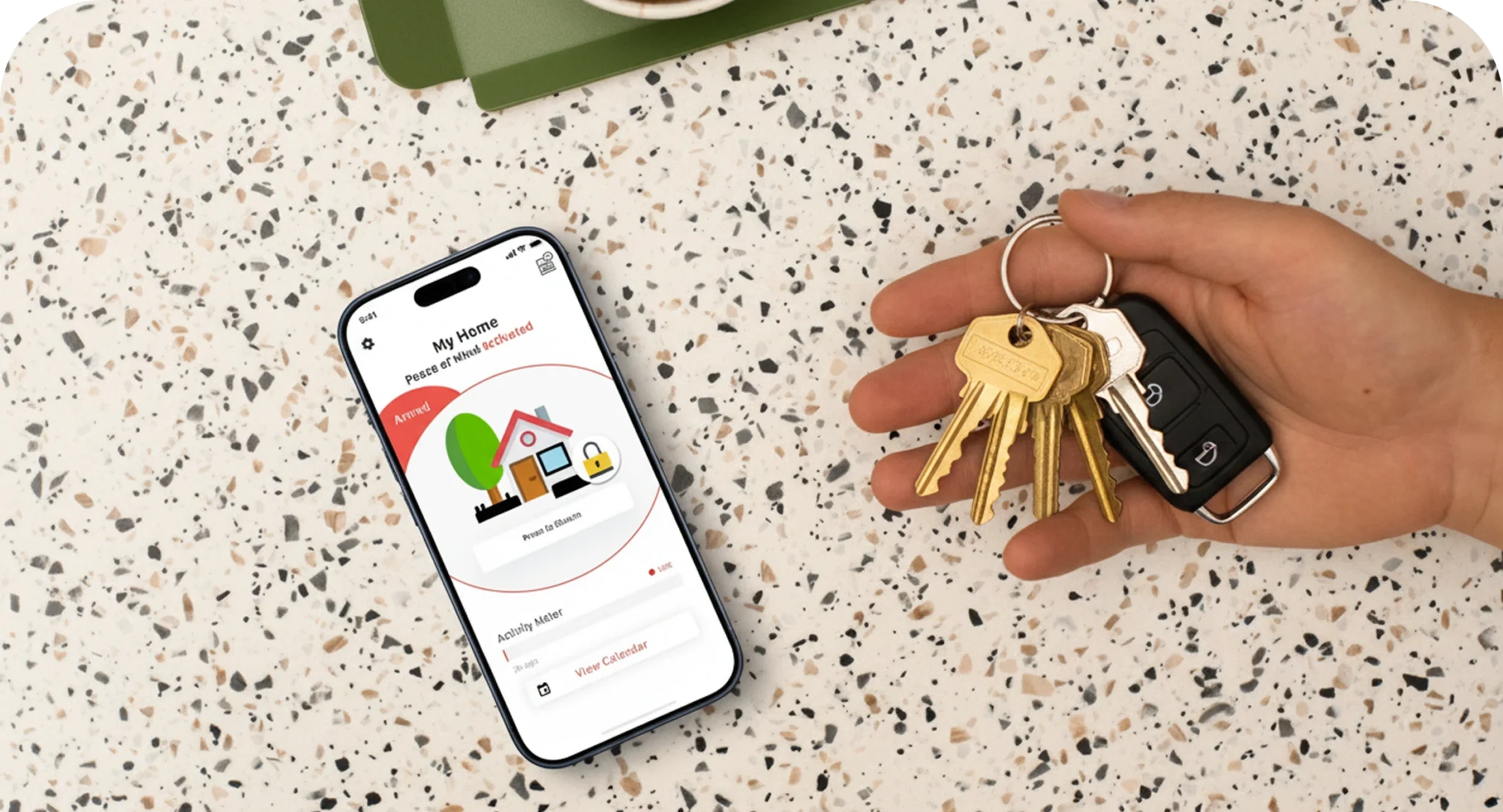
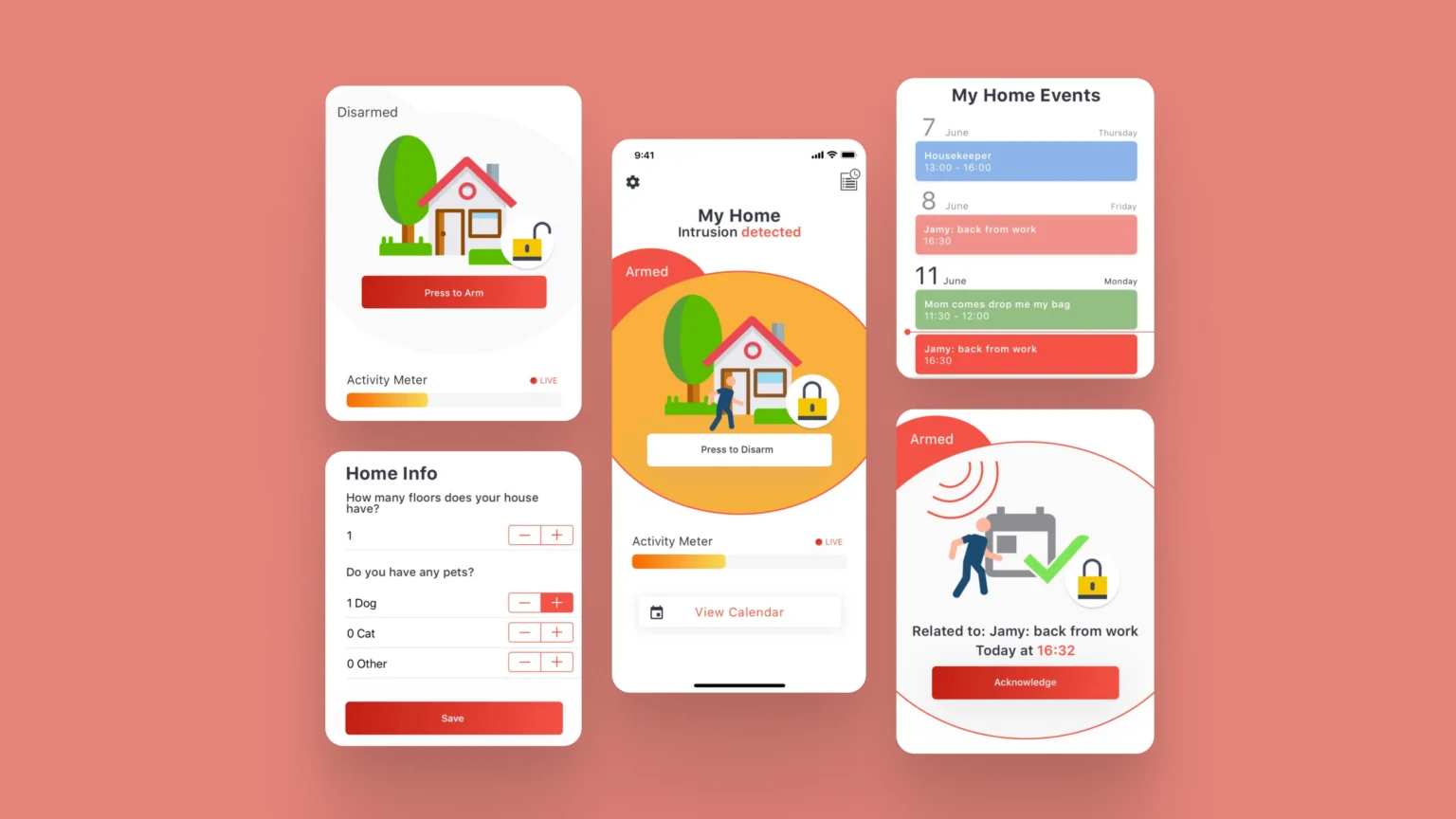
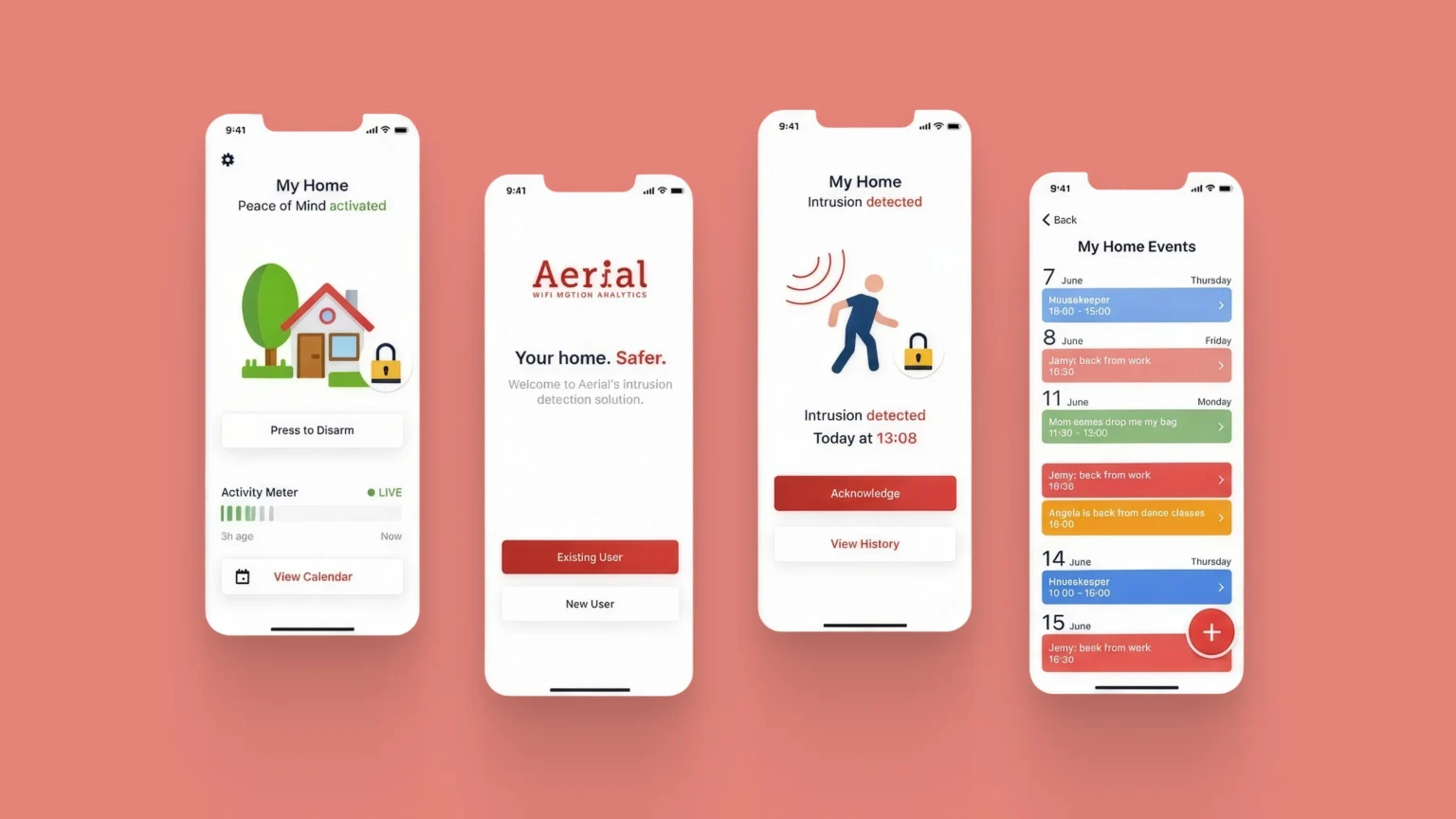
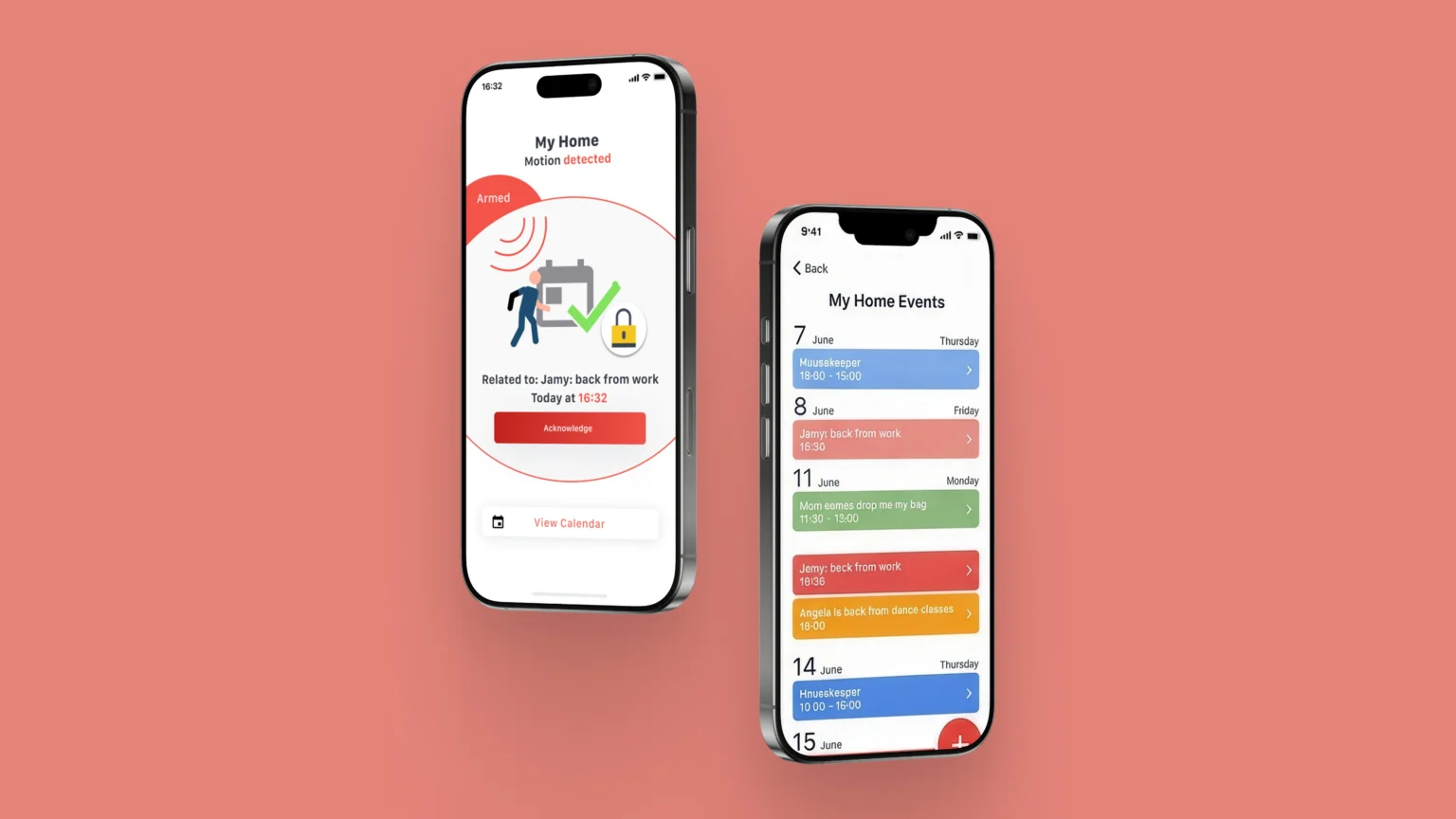
Rather than exposing users to technical readings, we built the app around a small set of clear states: armed, disarmed, intrusion detected. Every notification translates the underlying Wi-Fi signal into a message a homeowner immediately understands. On top of that, a short configuration flow lets users describe their space, floors, pets, household members, so the system interprets motion against a profile that actually fits the home it’s protecting, rather than a generic default.
Scheduling And Event History For Fewer False Alerts
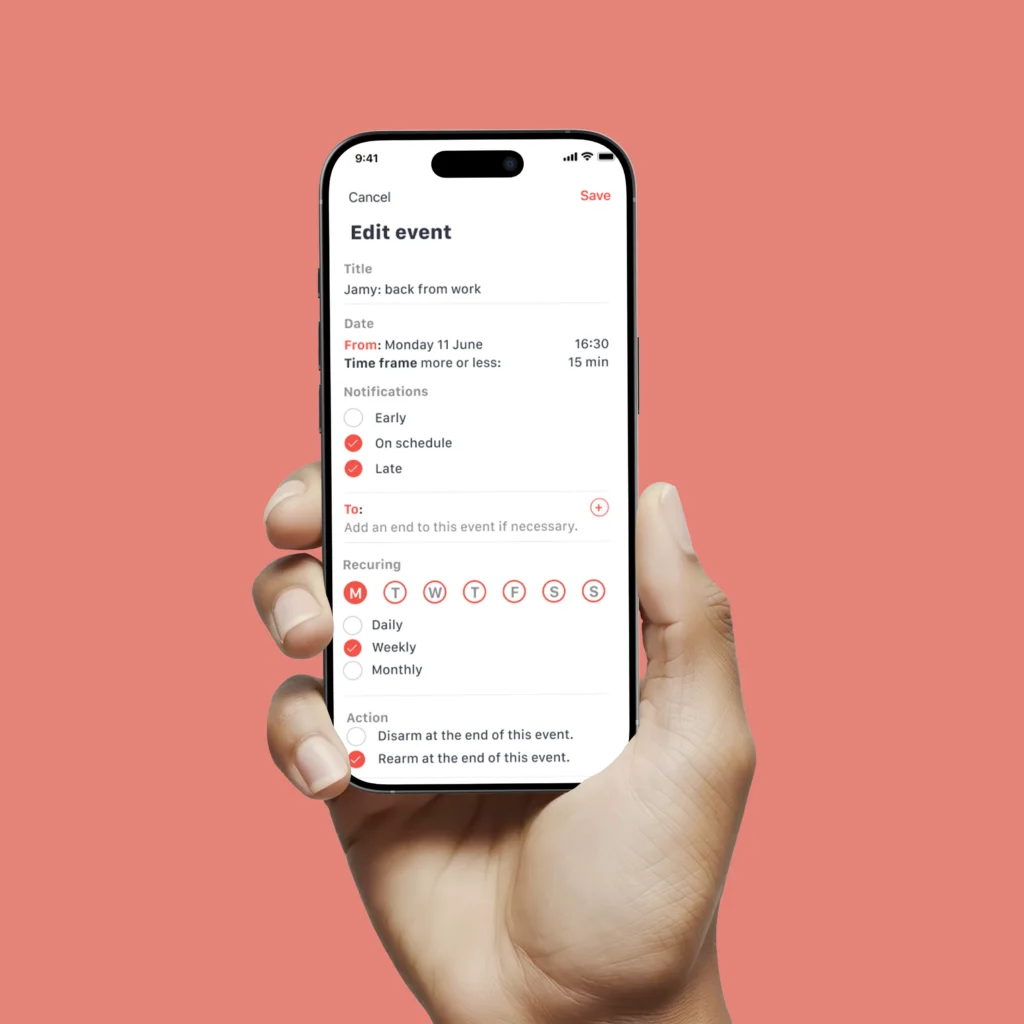
We added a calendar layer so users can log expected activity, a housekeeper’s visit, a family member’s regular schedule, which the system factors in before flagging something as unusual, alongside a full event history that gives users context on past activity.
Results and Benefits for Aerial's IoT Mobile App
Results
Users understood their home’s security status from the very first session, without needing to open any help documentation
The validated UX/UI wireframes made it into the production build without rework
New home profiles could be set up in just a few taps, without any technical back-and-forth
By simplifying a dense IoT sensing technology into a handful of clear states and a short setup flow, the app made Aerial’s technology usable for people with zero technical background, while keeping the underlying detection just as reliable.
Why Aerial Chose Sidekick Interactive for its Smart Home Security App
Aerial chose Sidekick Interactive for a proven track record in IoT mobile app development on connected hardware, not just standard consumer apps, and for real experience turning complex technical data into something end users can trust. Our ability to build native iOS and Android apps that work without a backend matched Aerial’s hardware-first architecture directly, and having one team handle the workshop, the prototyping, the UX/UI design, and the front-end development meant Aerial never had to coordinate across multiple vendors.
Sidekick Interactive's Expertise in IoT App Development
This project reflects our experience building for IoT, where hardware and software reliability have to work together seamlessly. Our team combines native mobile development, UX/UI design, and hardware integration for products where the underlying technology has to stay completely invisible to the end user, the same logic that drives our approach to custom IoT app development more broadly.